





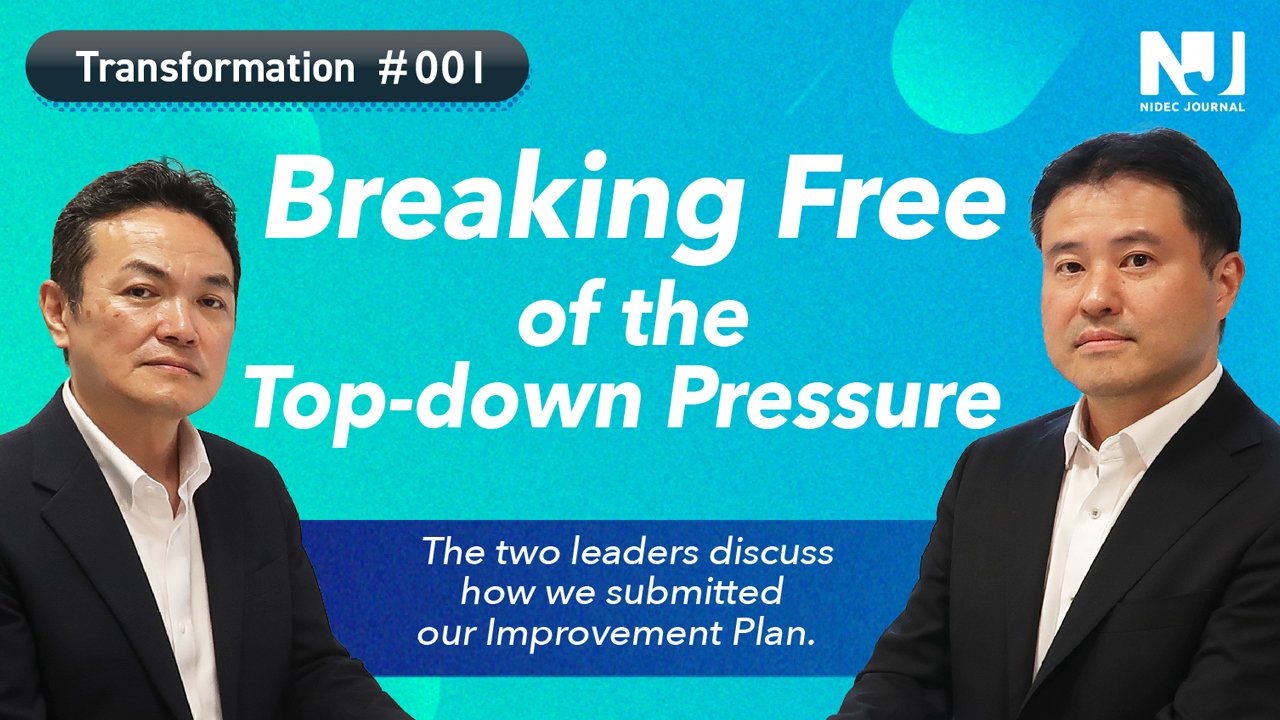
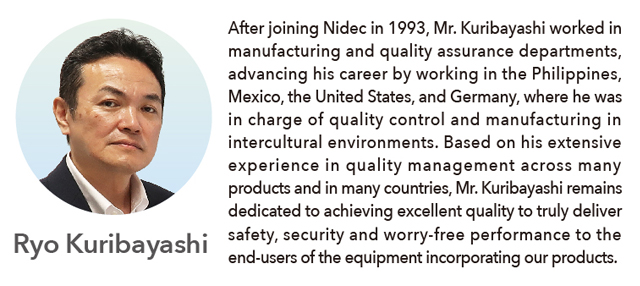
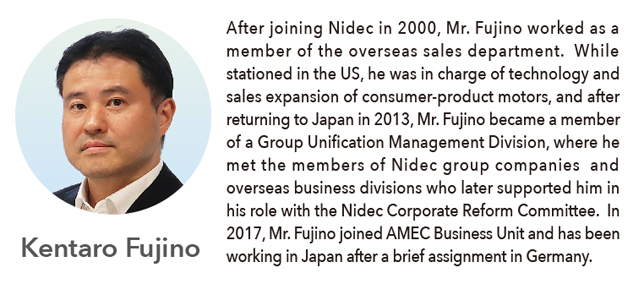
Nidec Journal Transformation is a project to analyze and visualize the background and process of our reform, including those aspects not included in our official press releases. In this edition, Messrs. Kentaro Fujino and Ryo Kuribayashi, VPs and the Nidec Reform Committee leaders who compiled the Improvement Plan, talk about the path of submitting it and their outlook beyond the process.
The Improvement Plan made amid the Third-Party Committee’s investigation
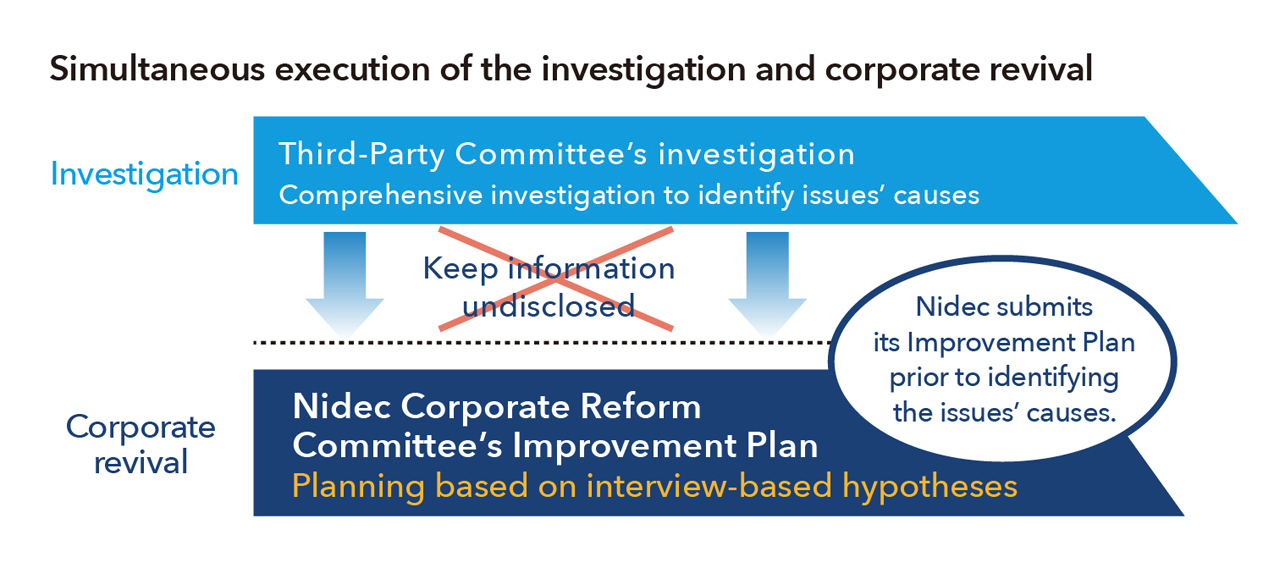
Fujino: “We had to prepare an Improvement Plan in the Nidec Corporate Reform Committee amid the Third-Party Committee’s investigation. Under normal circumstances, deliberating management might submit a report on an issue’s causes, and the company would then plan and execute improvement measures based on an investigation’s results and recommendations. However, under the Third-Party Committee process, we could not receive information from the Committee during its investigation as the Committee is an independent organization and information was completely kept confidential within the Committee.”
Kuribayashi: “Since we were unable to step into matters investigated by the Third-Party Committee, we acted based on our experiences with Nidec and talked with the members of the steering committee to come up with hypotheses of the issues’ root causes.”
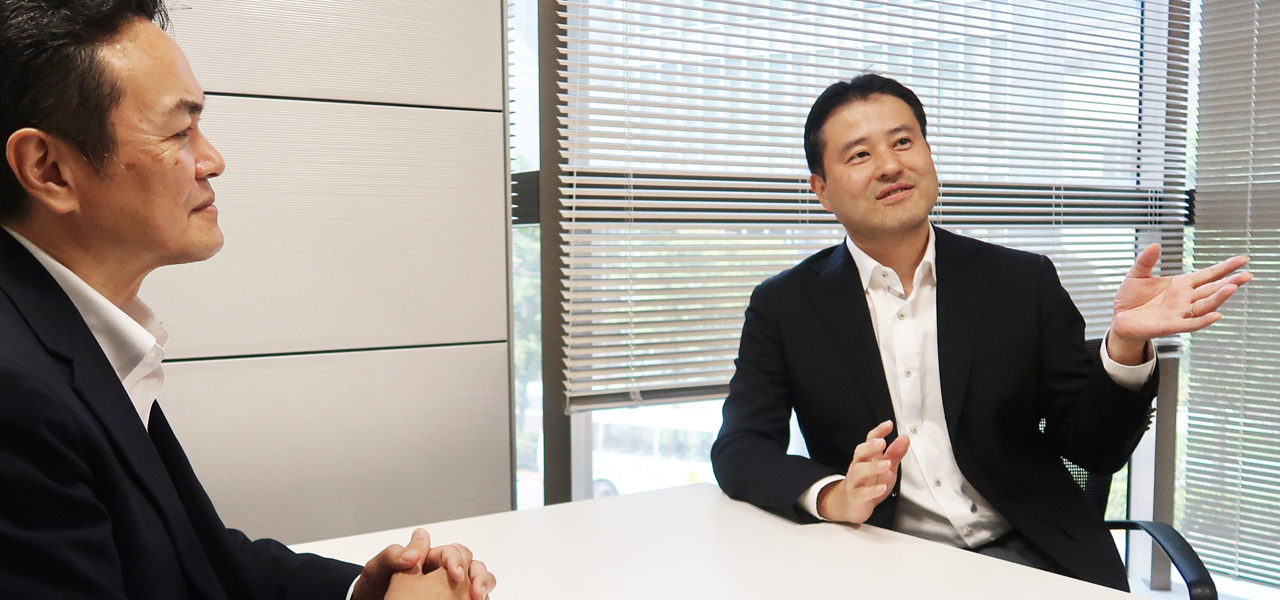
Fujino: “We had to submit our Improvement Plan to the Tokyo Stock Exchange (“TSE”) within three months after its designation of Nidec’s stock as a security on special alert. However, with the timing for the completion of Third-Party Committee’s investigation unknown, we could not wait to prepare a plan after its results came out. We needed to prepare measures by anticipating the issues’ causes.”
Kuribayashi: “In interviews with executives and other employees, we asked them ‘what they thought were issues in Nidec’s business operations so far.’ We undertook these interviews in consultation with the Third-Party Committee so as to not interfere with its investigation. Though Nidec group employees served on the Nidec Corporate Reform Committee, I think they had to spend some time watching how employee interviews would progress, as employees initially hesitated to talk with the Head Office’s Committee members. Those group company employees became able to talk with the Corporate Reform Committee frankly after several days, but they were probably uncertain as to ‘how far they could go with their statements’ even though they were eager to solve issues.”
Kuribayashi: “Another issue was that we as Reform Committee leaders weren’t fully knowledgeable about corporate governance. Fujino-san is from sales, and I am from quality assurance and other areas different from Fujino-san’s, and we didn’t know how the BOD and audit work well enough, and struggled trying to see where issues were. However, with the assistance of experts from outside of the company, this allowed us to consider matters from a totally fresh perspective and without preconceived notions, and thoroughly discuss what the issues were and how to solve them.”
Fujino: “Due to the restrictions that those who may become subject to the Third-Party Committee’s investigation could not serve as work-level staff to prepare the Improvement Plan, we had to hypothesize the issues’ causes and make improvement measures despite a lack of people who knew very well the workplaces where the issues occurred. Though we submitted to the TSE an Improvement Plan based on our hypothesis, the process doesn’t end there: We need to update our Improvement Plan based on our continued consideration and the feedback we subsequently received from the Third-Party Committee, and then launch the measures group-wide, organize and operate them, and actually improve our group.”
Core of the hypothesis: Why we could not cut free of the pressure
Fujino: “When preparing an Improvement Plan, there were suggestions that, in addition to the general issues we should analyze, there may have been issues unique to Nidec. These suggestions led the Nidec Corporate Reform Committee to discuss based on its individual Reform Committee members’ experiences and write them down to build our hypothesis.”
Kuribayashi: “One of the answers we came to see in this process was a ‘pressure-applying structure,’ where after receiving excessive pressure to achieve business targets, some executives would straightforwardly apply similar pressures to frontline personnel, though situations may differ among organizations and executives. These executives should have digested the top leader’s words and conveyed them to their organizations in an appropriate way for them. In reality, however, those executives believed that under the culture of the company they could not do it. I believe such circumstances caused the workplace to be overloaded with target-achieving work, creating a misconduct-prone environment.”
Fujino: “Underlying this conduct was the notion that employees must think the same way as their company’s founder, and that otherwise we would not be able to grow as a company. Back then, executives were probably not allowed to digest the top leader’s words based on their own positions or understandings.”
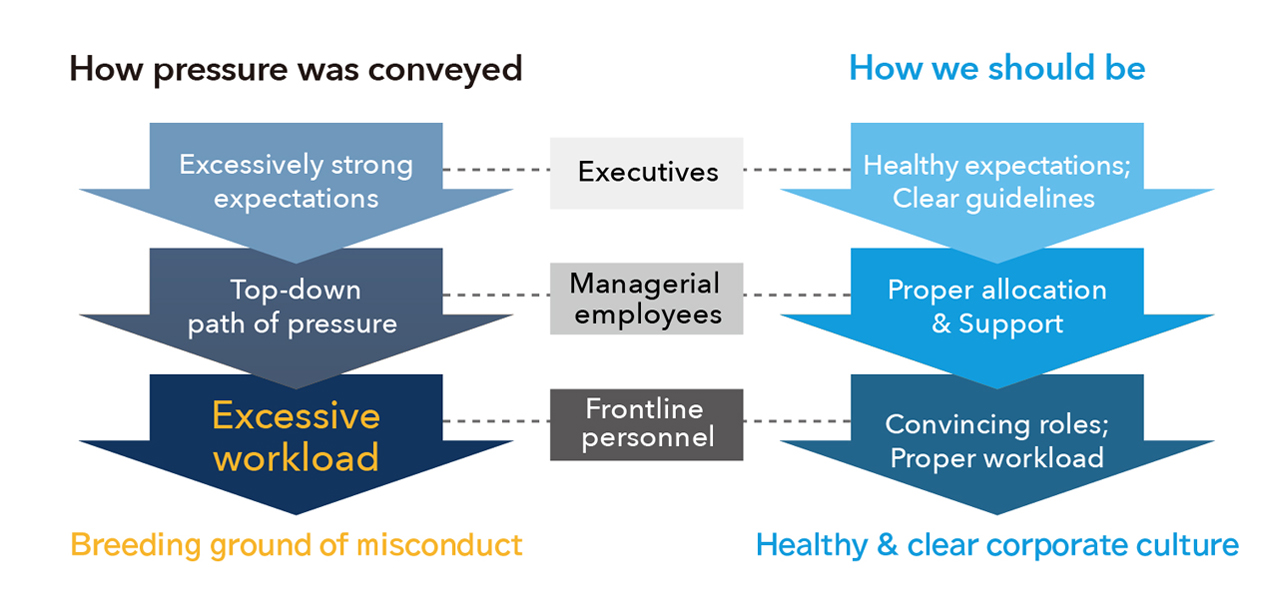
Fujino: “Executives were strongly made to ‘think and act like leaders.’ This is a culture that makes you think you should spend the company’s money as if it were your own. The notion per se is right in some aspect; however, while those who received words from the founder in person could understand what he really meant, such messages were communicated indirectly or could not be adjusted in line with the times, causing some organizations to have gaps with those messages and their appropriate meaning.”
“Also, situations differ between Japan and overseas and even between organizations overseas. While organizations receiving directions directly from Japan were prone to pressure, some locally managed entities were able to handle pressure properly while being aware of it. Under such circumstances, many people regard the current group-wide reform as a ‘natural action to take as a company.”
Break free of the structural pressure to become a true global company
Kuribayashi: “The recent issues have caused anxiety and concern among many stakeholders. We are taking action determined never to repeat this experience. We must change our accounting and quality systems and even our corporate culture, which is Nidec’s basis. I want this opportunity for all of us to change. Becoming a true global company requires us to face issues with sincerity and execute improvement measures that we have never executed successfully before.”
“As a first step, for Nidec to ‘evolve into a company that meets contemporary company standards,’ we are listening to employees’ voices and learn from other companies’ actions to review operations whose essence has been lost. So far, the Nidec group has been like a group of separate founder-led mid-small sized companies. Such a company will stop functioning as an organization when its top leader is gone. This is why we now have five business pillars in place, with each one creating targets for itself and preparing a strategy. This transition from small-company-based actions to globally coordinated pillar-based operations will enable us to demonstrate scale-based strength.”
“Going forward, we ourselves need to see how realistic our targets are. Nidec is transforming into a company whose members think and act both as an organization and as individuals. While our workload will increase in a way different from the way it has increased in the past, we will ensure that the necessary support and care are provided at the same time.”
Fujino: “The market expects us to grow our businesses in a healthy way, while our employees expect Nidec to improve its organization and culture. Both efforts need to go hand in hand. Going forward, Nidec will comprise five pillars, with each one having a strategy in place. In addition to creating purpose and value, we as a company need to reform our businesses and organizations to enhance our corporate value. Let us all think about how we should engage with not only society and customers but our head office, group companies, affiliates, and all the other organizations, operations and people, instead of only thinking of ourselves. This is where we start, and this is our Re-Definition declaration, in my opinion.”
Kuribayashi: “This declaration will lead to the creation of our purpose. By thinking what we work for and why we work for Nidec, we will be able to see how best to contribute to society and find a rewarding sense of satisfaction. Then we will be able to talk to our families about Nidec proudly.”
Fujino: “Through the recent series of activities with the Nidec Corporate Reform Committee, I was able to realize the relations among the head office, group companies, and Business Units. I will implement our corporate reform, which we conduct by exchanging opinions freely within the Nidec group, by executing the series of measures and the subsequent five-year Nidec management reform plan.”
“Based on the new five business pillars, we will continue to work with our global colleagues willing to take on challenges at Nidec and work with pride in our respective fields, to see how they contribute to society. Thus, we will redefine our raison d’etre in Nidec and society and make it a better company where our employees find their jobs satisfying.”
Kuribayashi: “We will work steadily to carry through the ongoing five-year Nidec management reform plan. It is through this reform that we will remove the existing barriers among the head office, group companies, and Business Units to build an organizational culture where we all can exchange opinions with each other and create things jointly. I also believe that the true sense of job satisfaction will be born out of our global colleagues’ pride and an environment of proactive thinking and growth. Mr. Fujino and I will serve as torchbearers to work with everyone and create a new, proud Nidec that utilizes each employee’s enthusiasm to the maximum extent.”
Our reform for Nidec’s revival has just begun. Nidec Journal Transformation is a forum to explain the status of Nidec’s reform and steps going forward. We will keep everyone updated on our path of trial and error.